
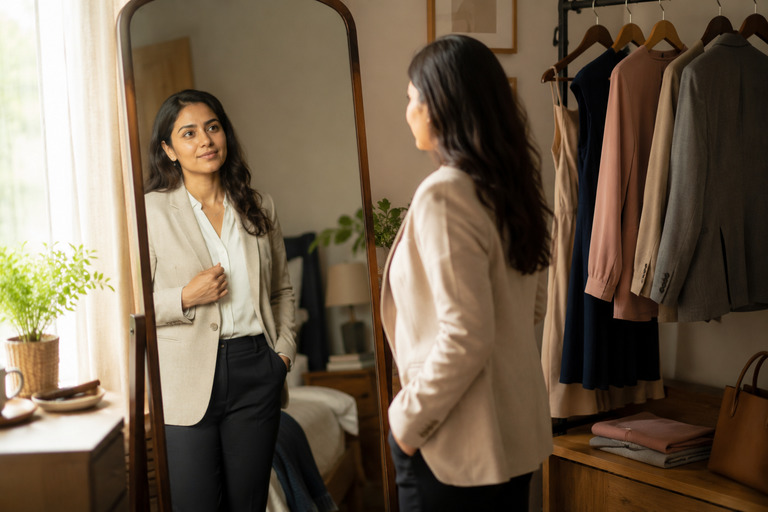
Life changes before the wardrobe does.
A new role, a return to work, marriage, motherhood, relocation, recovery, retirement or another significant shift can change daily life and self-perception.
The clothes may still fit, yet feel disconnected. Others may belong to an earlier routine, identity or level of responsibility. The question is often not what to buy, but what feels relevant now.
The wardrobe can belong to an earlier version of life
Clothes hold memory.
They may represent a former workplace, a different body, another social life or a time when priorities were different. That can make wardrobe decisions unexpectedly emotional.
There is no need to reject an earlier version of yourself. But the wardrobe should not prevent the present one from being seen.
A useful wardrobe reflects the life being lived now.
Change creates practical questions
Different transitions create different needs.
Returning to work may require clothes that support confidence after time away. A senior role may bring more visibility and formality. Parenthood may make comfort, movement and simplicity more important. Relocation may introduce a new climate or social environment.
Before changing it, ask:
- What does an ordinary week now look like?
- Which situations require greater confidence?
- What no longer feels natural?
- Which clothes still represent me?
- Where does the current wardrobe make life harder?
These questions help identify what needs to change without turning the process into complete reinvention.
Start with what still feels right
A new phase does not mean discarding everything.
Some pieces continue to work because they reflect lasting preferences rather than temporary circumstances. A favourite colour, a familiar silhouette or a particular way of combining clothes may still feel entirely right.
Keep what remains useful, comfortable and personally meaningful.
This creates continuity and stops the wardrobe from feeling like a costume.
Allow your preferences to change
People often keep dressing according to rules formed years earlier.
They may avoid colours they once believed did not suit them, repeat silhouettes that no longer feel comfortable or maintain a level of formality that belongs to a previous environment.
A transition is a good time to question these habits.
You may now prefer cleaner lines, softer fabrics, stronger colour or greater simplicity. That simply reflects a different point in life.
Dress for the body you have now
Physical change can make dressing difficult, especially when clothes recall a former body.
Waiting to return to an earlier size can leave the present wardrobe incomplete and discouraging.
Clothes should support the body as it is today. Good fit, proportion and fabric improve movement, posture and comfort immediately.
The present body deserves clothes that work for it now.
Build for the life you actually live
A wardrobe can become aspirational in the wrong way.
It may contain clothes for dinners that rarely happen, formal events that are uncommon or a working routine that no longer exists, while everyday situations remain unsupported.
Start with the most frequent parts of life.
Create dependable combinations for workdays, social occasions, family responsibilities and more visible moments. Occasional pieces can then be added with more judgement.
The wardrobe should serve reality first.
Do not rush to fill every gap
Transitions can create urgency. It may feel necessary to replace everything quickly.
That often leads to expensive choices made before preferences and needs are fully understood.
Begin with a small number of dependable pieces. Wear them. Notice what works. See what still feels absent.
A wardrobe built gradually is more likely to feel accurate.
Starting again does not mean starting from nothing
Personal style is not erased by change. It develops through it.
The colours, shapes and details that have always felt natural can remain. What changes is how they are interpreted for a different life.
The aim is not to create a new identity. It is to make enough room for growth without losing the thread of who you have been.
A wardrobe for a new life stage should feel current, capable and recognisable.
It should quietly show that you are ready for what comes next.