
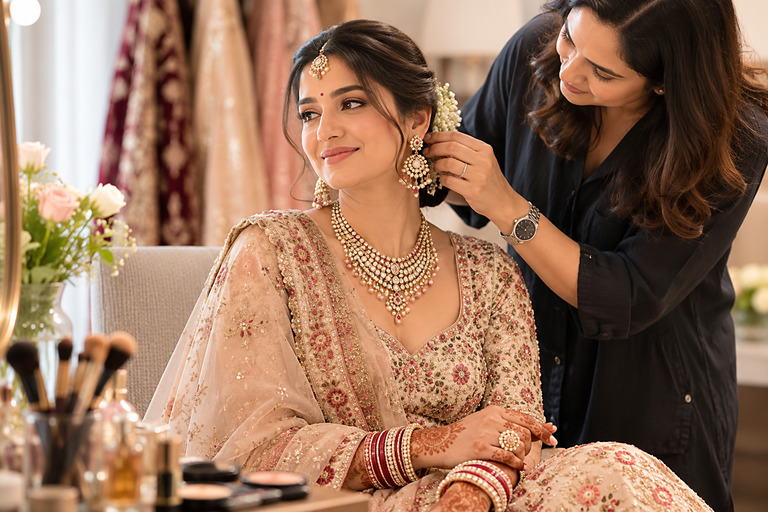
A wedding invites transformation.
The clothes are more elaborate, the jewellery carries greater meaning and every detail receives more attention than it would on an ordinary day.
Yet the bride should still be recognisable.
The strongest bridal image does not create a different person. It brings greater definition to the woman already there, while allowing her to feel comfortable, confident and fully present in the celebration.
Begin with the person, not the trend
Bridal inspiration is everywhere.
Celebrity weddings, designer campaigns and social media can all be useful references, but they can also make it harder to recognise what genuinely suits you.
A look may be beautiful and still feel wrong on someone with a different personality, body language or comfort level.
Before choosing colours, silhouettes or jewellery, ask:
- What do I naturally feel confident wearing?
- Do I prefer restraint or ornament?
- Am I comfortable being highly styled?
- Which details feel emotionally meaningful?
- What should remain distinctly mine?
These answers create a clearer direction than trend alone.
Let the whole look work together
The outfit, jewellery, hair, makeup and accessories should not feel like separate decisions.
A highly detailed outfit may need restraint elsewhere. A simpler silhouette may allow jewellery or makeup to carry more visual importance.
This does not mean everything must match. It means the elements should relate through proportion, tone and mood.
When too many details compete, the bride can disappear behind the styling.
Comfort is part of the image
A bride may spend hours standing, greeting people, moving between ceremonies and being photographed.
An outfit can look beautiful for a few minutes and still become difficult to carry through the day. Weight, restrictive tailoring or unfamiliar footwear can affect posture, movement and expression.
Comfort is not separate from appearance. It shapes it.
When the bride feels secure in what she is wearing, she moves more naturally and can remain present in the occasion instead of constantly adjusting herself.
Tradition can still feel personal
Family expectations and cultural traditions often play an important role in wedding choices.
The answer does not have to be choosing between tradition and individuality.
A traditional silhouette can be interpreted through a colour that feels more personal. Heirloom jewellery can be balanced with simpler styling. Family preferences can be respected without allowing every decision to become externally driven.
Personal expression is often found in how traditions are carried, not in rejecting them.
Think beyond the mirror
Wedding styling should work in real life, not only in a fitting room.
Consider how the look will feel while walking, sitting, greeting guests, performing rituals and moving between indoor and outdoor settings. It should also hold together in photographs without becoming theatrical.
The bride should not need to perform for the image to work.
A strong bridal look supports the person through the occasion instead of demanding constant attention.
More is not always more meaningful
Weddings can create pressure to keep adding.
Another accessory, another treatment or another layer of detail can seem necessary because the occasion is important.
But significance does not come from quantity.
A meaningful piece of jewellery, beautifully fitted clothing or a colour that brings life to the face can have more impact than several competing elements.
Restraint can make the right details more visible.
The bride should recognise herself
The final look may be more formal, refined and expressive than anything worn before.
It should still feel believable.
When a bride sees herself in the mirror, the response should not be surprise at becoming someone else. It should be recognition, with greater confidence and occasion around it.
That is the difference between being dressed and being understood.
Bridal styling works best when the celebration is visible, but the person remains at its centre.