
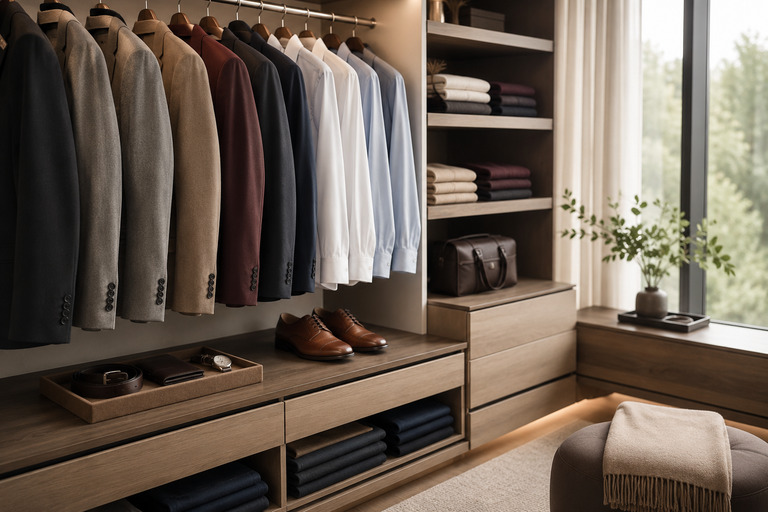
A professional wardrobe should make mornings easier, not more complicated.
It does not need to be large, expensive or highly formal. It needs to support the work you actually do, the environments you move through and the way you want to be perceived.
The best wardrobes are usually not built around more clothes. They are built around better decisions.
Start with your real working week
Before buying anything, look at how you actually spend your time.
A person working mainly from an office will need something different from someone who travels frequently, meets clients occasionally or works across formal and relaxed environments.
Consider:
- How many days require formal dressing?
- How often do you meet clients or senior stakeholders?
- Do you travel regularly?
- Are presentations or public-facing meetings common?
- How much movement does your workday involve?
A wardrobe becomes useful when it reflects these realities rather than an imagined version of professional life.
Build around reliable combinations
The most useful professional wardrobes contain pieces that work together without much effort.
A jacket that works with several trousers, shirts that can move between meetings and regular workdays or shoes that suit more than one level of formality create far more value than isolated statement pieces.
Think in combinations rather than individual purchases.
If something can only be worn one way, ask whether it deserves space in the wardrobe.
Fit matters more than quantity
Professional clothing does not need to be expensive, but it should fit properly.
Poor fit can make even a good garment look careless. Sleeves that are too long, trousers that break awkwardly or jackets that pull across the body affect the overall impression immediately.
Small alterations can often make a greater difference than buying something new.
Good fit also improves comfort, posture and movement, which naturally affects confidence.
Use colour with purpose
A professional wardrobe does not have to mean black, grey and navy only.
Colour can bring energy, individuality and visibility when used with judgement.
The key is to understand which shades work well near the face, which colours combine easily and which ones suit the environment.
A smaller palette often makes dressing easier because more pieces naturally work together.
This does not mean everything needs to match. It simply creates enough connection for the wardrobe to feel intentional.
Separate everyday needs from occasional needs
A common mistake is building a wardrobe around rare events.
Someone may own several formal outfits for conferences or celebrations but still struggle every morning with normal workwear.
Cover the most frequent situations first.
Build strong options for regular workdays, meetings and client interactions. Then add pieces for presentations, travel, formal dinners or other occasional requirements.
The wardrobe should support what happens most often.
Comfort affects professional presence
Clothes that constantly need adjusting become distracting.
Shoes that are painful, fabrics that restrict movement or garments that make you overly conscious of your body can reduce confidence during the day.
Professional dressing should allow attention to remain on the work.
Comfort does not mean becoming casual. It means choosing clothes that allow you to sit, walk, travel and communicate naturally.
Avoid buying for one version of yourself
People often buy for the person they think they should become.
They purchase highly formal clothes because they associate them with seniority, or fashionable pieces because they feel pressure to appear current.
A strong wardrobe should still feel believable.
Professional image works best when it strengthens the individual rather than replacing them.
Review before you add
Before making another purchase, look at what already exists.
Which pieces are worn repeatedly? Which remain untouched? What is missing that would make several existing pieces more useful?
Sometimes the answer is not another outfit. It may be one jacket, a better pair of trousers or a more practical shoe.
A professional wardrobe works when the pieces support each other.
It should reduce hesitation, reflect the role you occupy and allow you to get dressed without turning every morning into a decision-making exercise.